top of page

Speakers

Prof. Dr. Aitor Mugarza

Catalan Institute of Nanoscience and Nanotechnology (ICN2), ES

Graphene Nanoarchitectonics: from LEGO Chemistry to Device Integration

Aitor Mugarza is ICREA Research Professor and Group Leader of the Atomic Manipulation and Spectroscopy Group at ICN2 since 2013. He has been Marie Curie Fellow at the Lawrence Berkeley National Laboratory, USA, and Ramon y Cajal Fellow at ICN2. He is author of 90+ articles, and of 70+ invited talks at international conferences, universities and schools. He is founder and coordinator of the SPM Platform that is being created at ALBA synchrotron. His research activity is based on the investigation of quantum properties of matter on the nanoscale, and developing strategies to manipulate them with atomic precision.

Dr. Alessandra Zanut

University of Padova, IT

Advanced Nanofabrication Strategies for Electrochemical/ECL Platforms and Tissue-Mimetic Biointerfaces

Dr. Alessandra Zanut is a Tenure Track Assistant Professor at the Department of Chemical Sciences (DiSC) of the University of Padova and co-founder of the start-up NanoPhoenix Srl, which develops micro- and nanostructured devices for life science applications. She was Postdoctoral Researcher in the Department of Chemistry, University of Bologna (Italy) and after that she was granted an NYU Provost fellowship to work at the Chemical & Biomolecular Engineering Department, NYU Tandon School of Engineering (New York, USA).

Her research focuses on the fabrication of micro- and nanostructured surfaces via high-throughput nanolithography techniques for advanced electrochemical (EC) and electrochemiluminescent (ECL) biosensors applied to health, environmental, and biochemical monitoring.

Prof. Dr. Andrea Vezzoli

University of Liverpool, UK

Quasi-Ballistic Transport in Uncapped Linear Carbon Chains

Andrea Vezzoli is a Royal Society University Research Fellow and Professor of Physical Chemistry at the University of Liverpool. His research focuses on the fabrication of functional single-molecule junctions, devices where individual molecules are "chemically soldered" to nanoelectrodes. His group combines organic synthesis with high-bandwidth nano-electronic measurements to establish structure-property relationships with a specific focus on electromechanical and emissive properties. Supported by the Royal Society, EPSRC, UKRI, and the ERC, his work aims to define the ultimate limits of charge transport and functionalisation at the single-molecule level.

Prof. Dr. David J. Norris

ETH Zürich, CH

From Fourier Surfaces to Fourier Pixels

David J. Norris studied colloidal quantum dots under Moungi Bawendi at MIT, receiving his Ph.D. in 1995. After a postdoc with W. E. Moerner on single-molecule spectroscopy at UCSD (1995–1997), he started his own research group in industry (NEC). In 2001, he moved to the University of Minnesota to become Associate Professor and later Professor (2006) of Chemical Engineering and Materials Science. Since 2010, he has been Professor of Materials Engineering at ETH, where from 2016 to 2019 he was Department Head of Mechanical and Process Engineering. His research aims to tailor materials for new and useful optical properties.

Prof. Dr. Erdem Alaca

Koç University, TR

Hybrid Silicon Nanowire–MEMS Sensors: Fabrication Strategies and Performance Gains

B. Erdem Alaca received his B.S. degree from Boğaziçi University in 1997, and his M.S. 1999 and Ph.D. 2003 degrees from the University of Illinois at Urbana–Champaign, in 1999 and 2003, respectively. He joined Koç University as a faculty in 2004, where he is currently the director of n2STAR (Nanofabrication and Nanocharacterization) Center. An expert in deterministic integration of nanoscale building blocks in microsystems, his research interests include scale-dependence in mechanical behavior, micro and nanofabrication and precision instruments based on NEMS. He is a senior member of IEEE, and editorial board member of the Journal of Micromechanics and Microengineering.

Dr. Helmut Schift

Paul Scherrer Institute, CH

Nanoimprint Lithography – from Wafers to Chips

Helmut Schift studied electrical engineering at the University of Karlsruhe and performed his Ph.D. studies at the Institute of Microtechnology Mainz, Germany. After his graduation in 1994, he joined the Paul Scherrer Institute. He is head of the Advanced Nanomanufacturing Group in the Laboratory of Nano and Quantum Technologies. As one of the pioneers in nanoimprint lithography (NIL), he has developed enabling techniques for the patterning of functional surfaces with topological and chemical surface contrast. H. Schift is member of the steering board of the Nanoprint and Nanoimprint Technology (NNT). At MNE 2026, he is acting as program co-chair.

Prof. Dr. James Analytis

University of California, Berkeley, USA

FIB-Assisted Nanoscale Materials Synthesis

James Analytis joined the Berkeley faculty in 2013 as the Charles Kittel Chair in condensed matter physics, and served as Department Chair from 2020-2023. He received his B.Sc. in physics from Canterbury University in 2001 and his D. Phil. from the University of Oxford in 2006. Following his graduate studies, Analytis was a Lloyd's Tercentenary Fellow at the University of Bristol, where he worked on understanding the nature of anisotropic scattering in cuprate superconductors. In 2008 he became a postdoctoral fellow at Stanford University where he worked on both pnictide superconductors and topological insulators. Analytis' current interests are unconventional superconductors, quantum critical systems, frustrated magnets and topological spintronics.

Dr. James Owen

Zyvex Labs, USA

Single-nm Nanoimprint Masks by STM Lithography, ALD and ALE, for an Energy-Efficient Alternative to EUV

James has a BEng and MA (Oxon) in Metallurgy and Science of Materials (1993) and a DPhil (Oxon) in Materials Science (1996). Since then, he has worked at UCSB, UCLA and HRL, and the National Institute for Materials Science (Tsukuba, Japan) as an Independent Research Fellow. He worked with Prof. Renner at the University of Geneva setting up a new research group, before joining Zyvex Labs in 2010. He has used STM to study atomic-scale chemistry, self-assembled nanostructures and epitaxial growth processes on semiconductors, while at Zyvex Labs, he has focussed on developing high-speed atomically precise STM lithography.

Dr. Jana Chaaban

Heidelberg Instruments Nano, CH

Integrated Automation and Parallelization of Thermal Probe Lithography for Advanced Nanodevice Fabrication

Dr. Jana Chaaban holds a Bachelor's in physics from McGill University and a PhD in Micro and Nanosystems from ETH Zürich. In her doctoral research, she focused on electrohydrodynamic nanodrip printing and its scalability via the microfabrication of a chip-based multi-nozzle printhead. Her research activities took her to internships and project work at the American University of Beirut Medical Center, IBM Research in Zürich, ABB, and since 2021 Heidelberg Instruments Nano. At Heidelberg Instruments Nano, Jana is heading the Process and Applications Laboratory. In this capacity, she leads process development and worldwide customer application demonstrations with the NanoFrazor systems. 

Prof. Dr. Juergen Brugger

EPFL, CH

Goodbye Binary? Towards Writing True Grayscale Nanostructures with Hot Tips

Jürgen Brugger is Professor of Microengineering at EPFL and head of the Microsystems Laboratory. His research, carried out with his students and collaborators, focuses on micro- and nanomanufacturing, spanning MEMS and NEMS with an emphasis on advanced lithography and additive micromanufacturing techniques. Prior to EPFL, he held research positions at Hitachi’s Central Research Laboratory in Tokyo, IBM Research (Rüschlikon), and the University of Twente, where he was involved in early developments in probe-based nanomanufacturing. The work of his group has been recognized with several distinctions, including his election as IEEE Fellow, an ERC Advanced Grant, MNE Fellow, membership in the Swiss Academy of Engineering Sciences (SATW), and EPFL’s Award for Best Teaching in 2025.

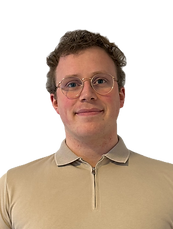
Magnus Vejby Nielsen

Technical University of Denmark, DK

Precision Grayscale Pattern Transfer in van der Waals Crystals

Sander Jæger Linde and Magnus Vejby Nielsen are currently master’s students at
the Technical University of Denmark (DTU). They obtained their Bachelor’s degrees in
Physics and Nanotechnology from DTU, where they were introduced to the field of 2D
materials and thermal scanning probe lithography (t-SPL), through their joint bachelor thesis.
The fruits of this thesis led directly to the paper “Fourier-Tailored Light–Matter Coupling in
van der Waals Heterostructures”, and indirectly to the development of FunFit – an AFM
image analysis tool aimed at quantifying fidelity of nanoscale grayscale lithography
topographies. At the 9th Thermal Probe Workshop, Sander and Magnus received the best
poster award for FunFit.

Dr. Maria El Abbassi

Chiral Nano, CH

Robotic Assembly of High-Quality CNT Devices

Maria El Abbassi holds a PhD in nanoelectronics from the University of Basel and a Master’s degree in Fundamental Physics from the École Normale Supérieure and Polytechnique. She has +10 years of experience in nanotechnology and has led major technical projects through several roles: TU Delft (postdoc) C12 (head of characterization) and now Chiral (head of R&D). On a technical level, she achieved the first demonstration of a robust graphene molecular transistor and the first measurement of a graphene nanoribbon quantum dot.

Dr. Marta Fernández Regúlez

Institute of Microelectronics of Barcelona (IMB-CNM, CSIC), ES

Thermal Scanning Probe Lithography as High-Precision Platform for Quantum Device Nanofabrication

Dr. Marta Fernández Regúlez is a senior researcher in the NanoNEMS group at IMB CNM (CSIC), working on advanced micro  and nanofabrication technologies for emerging device platforms. She holds a degree in Physics from the University of Valladolid and a PhD in Electronic Engineering from the Autonomous University of Barcelona, and has carried out research stays at UC Berkeley and CEA Leti. Her work focuses on hybrid lithography approaches that combine top down and bottom up strategies for nanoscale patterning, including directed self assembly of block copolymers and advanced infiltration-based processes. Her research explores how these technologies can enable new capabilities in semiconductor nanopatterning, quantum device architectures, nanoelectronics and sensors.

Prof. Dr. Robert Szoszkiewicz

University of Warsaw, PL

Thermochemical Nanolithography of 2D MoS2 and CrSBr

Robert Szoszkiwicz is a full professor of physical chemistry at the University of Warsaw, Poland. Previously, he was a STEM Impact Fulbright Fellow and a visiting professor at the University Kansas. He holds a PhD from EPFL, which was followed by post-doctoral stays at Georgia Institute of Technology and Columbia University, USA. His research focus is on nanomechanics of single protein molecules as well as physico-chemical characterization of arbitrary surfaces mainly via atomic force microscopy. Currently, he is applying his deep expertise to local mechanisms of selected reactions onto surfaces of 2D materials, developing original methods of learning about structural changes within single biological molecules from changes of their nanomechanical properties.

Dr. Salvatore Ethan Panasci

CNR-IMM Catania, IT

Laterally Resolved Strain Variations inside the Channel of Monolayer MoS2 Transistors

Salvatore Ethan Panasci received his M.Sc. degree in Materials Science in 2019 from the University of Padova (Italy) and Ph.D. in Material Science and Nanotechnology in 2022 from the University of Catania (Italy). From 2023 he is temporary researcher at the Institute for Microelectronics and Microsystems of the Italian National Research Council (CNR-IMM) of Catania. His scientific activities cover both the growth (DLI/CVD) and characterization of 2D materials (graphene, transition metal dichalcogenides) by atomic force microscopy (including C-AFM, KPFM) and Raman/PL spectroscopy. His work is also focused on the 2D materials integration with bulk wide band gap semiconductors (SiC, GaN).

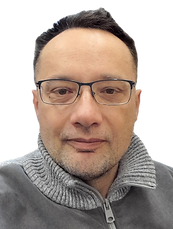
Sander Jæger Linde

Technical University of Denmark, DK

Precision Grayscale Pattern Transfer in van der Waals Crystals

Sander Jæger Linde and Magnus Vejby Nielsen are currently master’s students at
the Technical University of Denmark (DTU). They obtained their Bachelor’s degrees in
Physics and Nanotechnology from DTU, where they were introduced to the field of 2D
materials and thermal scanning probe lithography (t-SPL), through their joint bachelor thesis.
The fruits of this thesis led directly to the paper “Fourier-Tailored Light–Matter Coupling in
van der Waals Heterostructures”, and indirectly to the development of FunFit – an AFM
image analysis tool aimed at quantifying fidelity of nanoscale grayscale lithography
topographies. At the 9th Thermal Probe Workshop, Sander and Magnus received the best
poster award for FunFit.

Dr. Yoichi Miyahara

Texas State University, USA

Scanning Single-Electron Box Probe for Charge/Potential Sensing with Nanometer Spatial Resolution for Quantum Device Applications

Dr. Yoichi Miyahara is an associate professor of physics at Texas State University, specializing in advanced scanning probe microscopy for quantum materials and devices. He earned his Ph.D. in electrical engineering from Waseda University and held research positions at McGill University and EPFL before joining Texas State in 2019. His lab develops novel force-detected spectroscopic techniques to study quantum dots, nanoparticles, and 2D materials with nanometer-scale resolution. A recipient of NSF CAREER and MRI awards, he leads instrumentation efforts for ultra-low-temperature quantum measurements.

Prof. Dr. Zhiyong Fan

Hong Kong University of Science and Technology, HK

Abstract Pending

Bio pending
bottom of page